
How Much Energy Can a Solar Panel Generate?

A solar panel’s rated wattage does not tell you exactly how much electricity it will produce over a year. Using an illustrative annual yield of 900kWh per installed kWp, a 450W panel would produce about 405kWh a year before any shading adjustment. Actual output still depends on factors such as location, roof direction, pitch, shading, and system losses. So when estimating how much energy a solar panel can generate, use annual generation in kilowatt-hours, not the wattage printed on the panel.
Start With the Difference Between Watts and Kilowatt-Hours
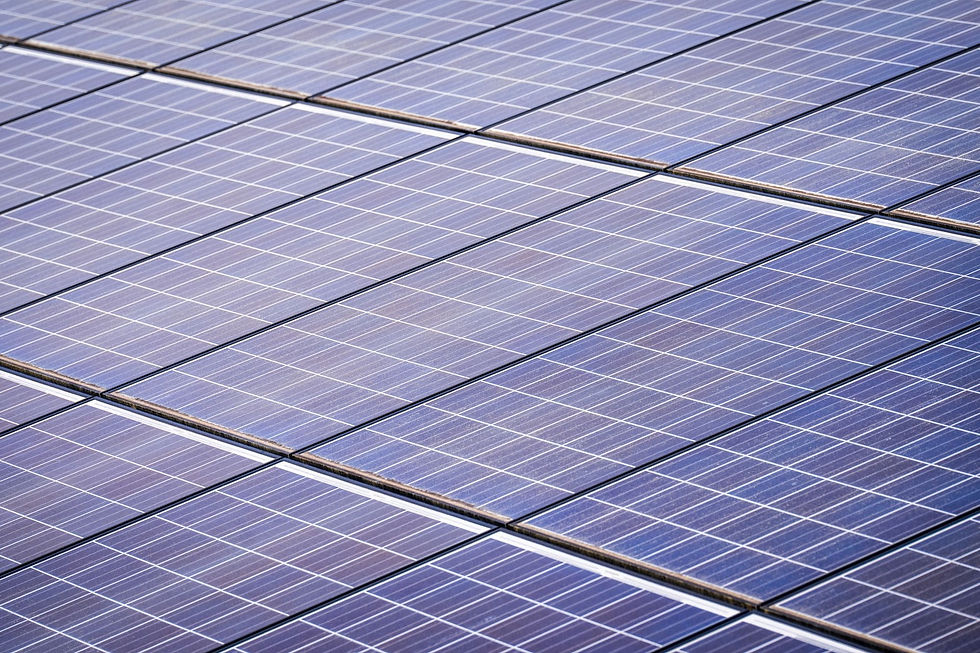
Before estimating output, it helps to separate the panel’s power rating from the electricity it generates over time.
A panel described as 450W has a rated power of 450 watts under standard test conditions. It does not mean the panel continuously generates 450 watts whenever there is daylight.
These are the measurements you will commonly come across:
Measurement | What it tells you | Example |
Watts (W) | Rated power of an individual panel | 450W |
Kilowatts (kW) | 1,000 watts of power | 450W = 0.45kW |
Kilowatt peak (kWp) | Rated capacity of a solar array | 10 × 450W = 4.5kWp |
Kilowatt-hours (kWh) | Electricity generated or consumed over time | 4,000kWh per year |
For homeowners, kWh is usually the figure that matters when discussing generation, because it tells you how much electricity the system is expected to produce over a period of time.
How Do You Calculate How Much a Solar Panel Could Generate?
The current MCS solar PV performance method uses the following basic calculation for estimated annual output:
Annual output (kWh) = installed capacity (kWp) × location-specific yield (kWh/kWp) × shading factor
For one 450W panel, the installed capacity is 0.45kWp.
Using an illustrative annual yield of 900kWh per installed kWp, with no shading adjustment:
0.45 × 900 = 405kWh per year
Here is how different panel ratings would compare under the same illustrative conditions:
Panel rating | Capacity | Illustrative annual generation |
400W | 0.40kWp | 360kWh |
450W | 0.45kWp | 405kWh |
500W | 0.50kWp | 450kWh |
The 900kWh/kWp figure is an example to demonstrate the calculation. It should not be treated as a UK-wide average or a prediction for your property.
For a location-specific estimate, the European Commission’s PVGIS solar calculator can model photovoltaic production using location, installed capacity, orientation, slope and system assumptions.
Why Can Two Identical Panels Generate Different Amounts?

The panel specification is only one part of the calculation.
Install the same panel on two different properties and the annual generation can differ because the conditions around it have changed.
Roof Direction and Pitch
In the UK, an unshaded south-facing roof will generally provide favourable annual solar generation.
That does not mean a roof must face directly south for solar to work. East and west-facing arrays can still generate useful amounts of electricity, although their generation profile through the day will differ.
Pitch also changes how sunlight reaches the panels.
The Energy Saving Trust’s solar panel guidance recommends considering orientation, shading and available roof space when assessing whether a property is suitable for solar.
Direction and pitch therefore need to be considered together rather than treating one compass direction as the only factor that matters.
Shading
Trees, neighbouring buildings, chimneys, dormers and other roof features can block sunlight from reaching part of an array.
How much that matters depends on where the shade falls and for how long.
A small chimney shadow for a limited part of the day is different from a roof affected by mature trees for several hours. This is why MCS performance calculations include a shading factor rather than assuming every panel has uninterrupted exposure.
Location
Solar irradiation varies across the UK.
A panel installed in one postcode will not necessarily produce the same annual total as the same panel installed elsewhere, even if both arrays face the same direction.
That is why applying a single “UK output per panel” number to every home can be misleading.
Time of Year and Weather
Solar generation is not evenly distributed throughout the year.
Longer days and stronger solar irradiation generally mean more generation during spring and summer, while shorter winter days produce less.
Panels still generate electricity in cloudy conditions. Output at any particular moment depends on the amount of solar energy reaching the cells.
The Rest of the System
The panel is not working in isolation.
Solar electricity passes through other system components, including the inverter, before it can be used as AC electricity in the home. Real installations therefore have system losses that should be reflected in sensible performance estimates.
This is another reason multiplying panel wattage by the number of daylight hours will usually give an unrealistic result.
What Does One Panel Become When You Build a Full Solar Array?
Most homeowners are not installing a single rooftop panel. Individual panel ratings are combined to create the total system capacity.
Using 450W panels as an example:
6 panels = 2.7kWp
8 panels = 3.6kWp
10 panels = 4.5kWp
12 panels = 5.4kWp
16 panels = 7.2kWp
Adding the panel ratings is easy. Deciding how much capacity actually suits the roof and household takes more thought.
Roof space, shading, electricity use, inverter design, and what will happen to surplus generation all matter.
If you want to see how panels, inverters and battery storage are combined into complete systems, our solar system ranges provide examples of the configurations we currently offer.
The rated kWp of those systems is useful for comparison, but it should not be confused with guaranteed annual generation.
If your question has moved from “how much does one panel generate?” to “how many should I install?”, our guide to how many solar panels you need covers system sizing in more detail.
Generation and Electricity Savings Are Not the Same Thing
This matters when comparing quotes because annual generation and bill savings are not interchangeable figures.
Suppose an array is estimated to generate 4,000kWh in a year. That does not automatically mean the household will buy 4,000kWh less electricity from the grid.
Some solar generation may be:
used directly by appliances in the home
stored for later if suitable battery storage is installed
exported to the electricity grid.
How much you use yourself depends partly on when your household consumes electricity.
Someone working from home during the day may have a different self-consumption pattern from a household where most electricity demand occurs during the evening.
That is why annual generation should not be converted directly into a savings figure without looking at consumption, tariffs, export arrangements and system costs.
Any projected bill saving or payback period should therefore be assessed separately using the household’s actual electricity use, tariff assumptions and installation cost.
If you are trying to understand the financial side rather than generation alone, our guide to whether solar panels are worth it looks at those factors separately.
What Should You Look for in a Solar Generation Estimate?
When comparing solar proposals, look at the assumptions behind the annual generation estimate rather than the kWh figure in isolation.
Under the MCS performance method, the calculation should take account of details such as:
installed system capacity in kWp
the property’s postcode region
array orientation
roof inclination
location-specific kWh/kWp values
shading.
MCS also makes an important point: solar performance cannot be predicted with complete certainty because solar radiation varies by location and from year to year.
That means an annual output figure should be treated as an informed estimate rather than a promise that the system will generate exactly that amount every year.
If two similar-sized systems are given noticeably different annual generation estimates, ask each installer to explain the orientation, shading and yield assumptions used. A higher forecast does not by itself show that one system is more suitable.
You should also be able to understand the equipment being specified, how shading has been treated and what assumptions sit behind any projected savings. Our solar buyer’s guide covers the wider points worth checking when comparing systems and installers.
For a significant home-energy purchase, it is also worth checking the installer’s current accreditation and the consumer protections that apply before signing a contract. The UK Government’s consumer guide to buying green heating and insulation products provides further guidance on comparing suppliers and understanding your rights.
What About Higher-Wattage Solar Panels?
A higher-wattage panel has greater rated power per panel, but that does not automatically make it the best choice for every property.
Higher output per panel can be useful where usable roof space is limited, but the overall system still needs to suit the roof layout, inverter and household requirements.
Panel wattage should therefore be considered alongside:
panel dimensions
available roof area
shading
system configuration
expected annual generation
household electricity consumption.
A higher panel rating is only useful if the panel dimensions and overall system design suit the available roof space.
How Can You Get a More Useful Estimate for Your Own Roof?
Online calculations are useful for understanding the basics, but they cannot account for every detail of your property.
When we assess a home for solar, we look at factors including electricity use, usable roof space, and roof conditions rather than choosing a panel count based on wattage alone.
Once those property details are known, the generation estimate can be based on the actual roof rather than a generic assumption.
If you want to move beyond a general calculation, you can book an online solar panel consultation with us to discuss your solar options and the questions you have about a potential system.
The Number That Matters Is Annual Generation
There is no single annual kWh figure that applies to every solar panel.
A 450W panel has 0.45kWp of rated capacity. Its actual annual generation then depends on factors including solar irradiation, orientation, roof pitch, shading and system performance.
That is why the most useful question is not simply, “How many watts is this panel?”
It is:
“How much electricity is this proposed system expected to generate on this particular roof, and what assumptions were used to calculate it?”
If a solar quote can answer that clearly, you have a much better basis for comparing systems than panel wattage alone.
Solar generation and financial projections are estimates rather than guarantees. Actual output and savings can vary with solar irradiation, weather, shading, system design, household electricity use, tariffs, export arrangements and other property-specific factors. Consider the assumptions, system costs and contract terms before making a purchase decision.


Comments